

Living rooms with Japandi style are redefining modern interiors with the aid of marrying the serene beauty of Japanese minimalism with the comfy functionality of Scandinavian layout. This hybrid aesthetic, referred to as Japandi, emphasizes easy strains, herbal materials, and a muted shade palette, resulting in spaces that feel both refined and welcoming. Rooted in mindfulness and simplicity, Japandi-fashion dwelling rooms provide a tranquil retreat from the chaos of everyday life.
Japandi living rooms aren’t simply visually calming—additionally, they promote intentional dwelling. Every piece serves a motive, from the low-profile furnishings to the organic textures and thoughtfully curated décor. Those rooms embody the Japanese philosophy of wabi-sabi, celebrating imperfection and transience, even as they honor the Scandinavian commitment to consolation and practicality. Collectively, they form areas that might be warm, harmonious, and deeply human.
Living rooms with Japandi fashion are a testament to the concept that less truly can be more. In the following showoff, we discover ten sleek examples of this layout philosophy in action—each presenting a completely unique interpretation of stability, simplicity, and understated splendor.
1. Neutral Tones and Natural Textures
Living rooms with Japandi style frequently begin with a basis of impartial tones that establish a calming and balanced environment. Shades of smooth beige, warm ivory, gentle greys, and mild timber finishes paint the space collectively to create a space that feels open and uncluttered. These hues no longer only reflect herbal light fantastically but also serve as the best backdrop for showcasing the quiet elegance of Japandi design. By way of stripping away visible noise, the focus shifts to form, texture, and the subtle interaction of substances.
What sets Japandi living rooms apart is their considerate use of natural textures to add depth without overwhelming the senses. Linen sofas, alright timber floors, and handwoven rugs invite a tactile experience that is both relaxed and subtle. Accents like easy ceramics, potted greenery, and uncooked wood portions upload warmth and authenticity to the space. This harmonious combination of tone and texture creates a living room that feels as serene as it’s far sophisticated.
Design Tip: Layer soft textiles over natural materials to create warmth without clutter.

2. Minimalist Yet Inviting
Japandi living rooms encompass an ideal mixture of form and characteristic, where simplicity meets warm temperature in the most elegant way. These areas take cues from eastern minimalism with their uncluttered layouts and low-profile furniture, whilst incorporating Scandinavian coziness via gentle textiles, muted colors, and natural light. The end result is a calming environment that encourages rest, mirrored image, and aware living.
What units Japandi living rooms apart is their emphasis on herbal substances and an impartial shade palette. Suppose light woods, stone accents, woven textures, and smooth, earthy tones that create a grounded, organic experience. Every object in the space has reason and purpose, supplying each aesthetic appeal and realistic function without overwhelming the senses.
Design Tip: Focus on function first—then let form follow in a beautifully understated way.

3. Nature-Inspired Color Palette
Japandi living rooms that include a nature-stimulated color palette convey the tranquility of the outdoors into the heart of the house. Those areas regularly function with tones drawn from the natural international—forest greens, stone greys, tender browns, and sandy beiges—creating a grounded and harmonious ecosystem. Rather than counting on formidable or contemporary shades, these hues evoke an experience of calm and permanence, making the room sense timeless and restorative.
In these Japandi living rooms, the connection to nature is further strengthened through substances like bamboo, rattan, wool, and unfinished timber. Indoor flowers upload existence and texture, whilst the mild interplay of light and shadow mimics the serenity of a woodland or a quiet garden. The result is an area that encourages mindfulness and well-being, embodying the Japandi principle that domestic life needs to be a nonviolent safe haven.
Design Tip: Draw color inspiration from landscapes—think moss, stone, and sand.

4. Black Accents for Bold Contrast
In Japandi living rooms, black accents offer a complicated counterpoint to the typically soft and impartial palette. Whether or not it is a matte black espresso table, minimalist pendant lighting, or slim-framed artwork, these ambitious touches upload intensity and structure without overwhelming the gap.
The assessment brings a sense of grounded beauty, highlighting the clean traces and natural substances that define the Japandi aesthetic. Used thoughtfully, black factors create visual hobby whilst preserving the calm, balanced surroundings that Japandi living rooms are known for.
Design Tip: Use black sparingly as a visual anchor.

5. Open-Plan Simplicity
In Japandi living rooms, open-plan simplicity is prime to creating an area that feels both airy and intentional. This layout approach embraces an unbroken drift between the residing and dining or kitchen regions, using cohesive substances like light-toned wood, tender textiles, and impartial color palettes to unify the distance.
Clean-lined furniture and uncluttered surfaces decorate the minimalist aesthetic, at the same time as diffused information—like floating shelves or a declaration pendant light—uploads warmth and person. The end result is a harmonious surrounding wherein functionality meets quiet beauty, ideal for modern-day lifestyles that cost each splendor and practicality.
Design Tip: Use repetition in materials and finishes to unify open-concept spaces.

6. Curved Forms and Organic Shapes
Curved paperwork and organic shapes bring a gentle softness to Japandi living rooms, subtly balancing the smooth lines and minimalist shapes that outline the fashion. Through incorporating factors like rounded espresso tables, arched doors, and softly contoured seating, those areas experience more fluid and alluring.
The usage of herbal substances—including easy timber, stone, and hand-formed ceramics—adds a tactile first-rate that complements the room’s connection to nature. In Japandi interiors, these natural paperworks don’t disrupt the classy—they improve it, adding movement and a feel of calm concord that makes the distance feel alive yet serene.
Design Tip: Incorporate curved forms to soften a linear aesthetic and enhance flow.

7. Textural Layering
Textural layering is a key design principle that provides intensity, warm temperature, and visual interest to an area via combining numerous materials and finishes. In Japandi living rooms, this technique is especially powerful because it blends the clean, minimal traces of Scandinavian design with the herbal, tactile elements of eastern aesthetics.
Suppose soft linen cushions in opposition to clean timber furniture, woven rugs over glossy flooring, and subtle contrasts like matte ceramics beside smooth surfaces. The result is a harmonious environment that feels both serene and lived-in, in which every texture plays a role in enhancing the understated beauty of the gap.
Design Tip: Focus on contrast in texture rather than color for visual interest.

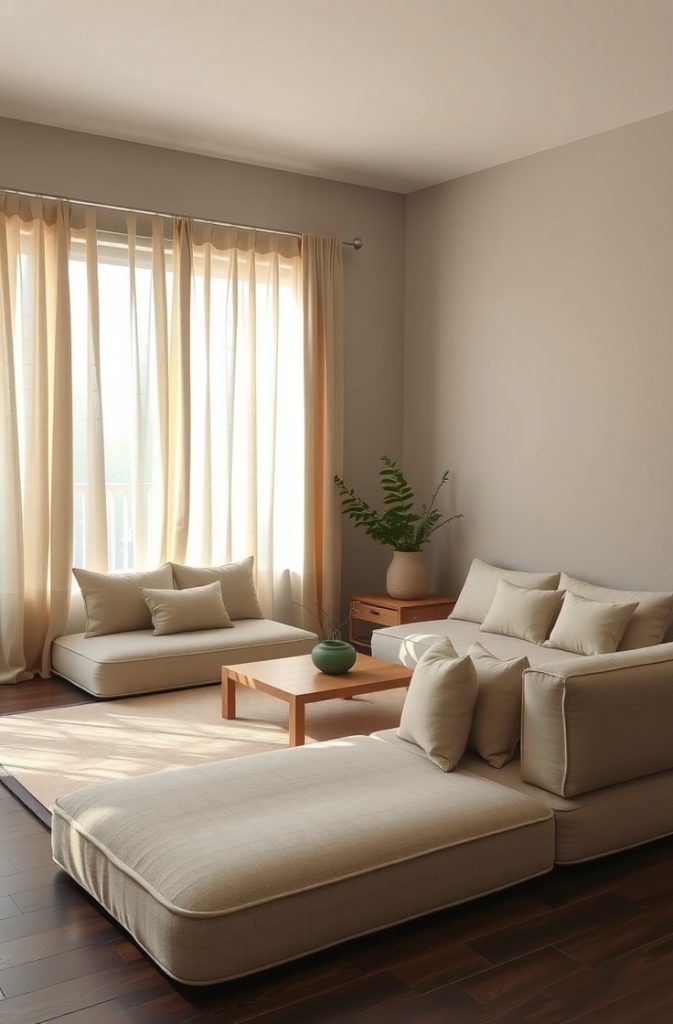
8. Low-Slung Furniture for Grounded Elegance
Low-slung furniture plays a key position in achieving grounded beauty, especially in Japandi living rooms, where simplicity meets warmth. These pieces, characterized by their low profile and smooth strains, create a chilled experience of openness at the same time as fostering a closer connection to the earth.
By minimizing visible clutter and emphasizing horizontal space, low-slung sofas, chairs, and tables enhance the serene, minimalist aesthetic that defines Japandi interiors. The result is a balanced and welcoming environment that feels both cutting-edge and timeless.
Design Tip: Embrace low-profile furniture for a sense of spaciousness and calm.
9. Wabi-Sabi Imperfections
Wabi-sabi imperfections have fun with the beauty located in the certainly imperfect, the elderly, and the unfinished—an aesthetic deeply rooted in Japanese philosophy. In Japandi living rooms, this concept involves existence through uncooked textures, weathered wood, homemade ceramics, and asymmetrical décor that inform a story of authenticity and ease.
As opposed to hiding flaws, Wabi-Sabi embraces them, permitting each object and floor to reflect the passage of time and human contact, creating a serene and level-headed environment that feels both lived-in and intentional.
Design Tip: Let imperfections tell a story—choose handmade over mass-produced.

10. Balanced Symmetry with Soul
Balanced symmetry with soul defines the essence of Japandi living rooms, in which the easy strains of Scandinavian layout meet the mindful minimalism of eastern aesthetics. Each detail is carefully chosen and harmoniously placed, creating a serene and dependent area that feels both intentional and welcoming. The symmetry brings visual order, even as natural substances, gentle textures, and heat tones add a soulful touch that makes the room experience actually lived-in.
Design Tip: Symmetry offers order; warmth offers soul. Strive for both.

Final Thoughts
Japandi living rooms are more than just a design trend—they’re a lifestyle statement. They embody the harmony between function and form, tradition and innovation, and austerity and comfort. Each of these 10 spaces invites us to slow down, breathe, and enjoy the elegance of simplicity.
Whether you’re renovating or refreshing your living space, let Japandi guide you toward a home that feels as peaceful as it looks.